| ⚡ What You Won’t Read Elsewhere If nausea after oily food keeps happening, your gallbladder may be the silent culprit — even without obvious pain. Up to 15% of adults have gallstones and many don’t know it. New research also shows your gut microbiome plays a major role in fat tolerance: a low-fiber diet kills the bacteria that help process fat, making future oily meals feel worse. These two angles are missing from most top-ranking articles. |
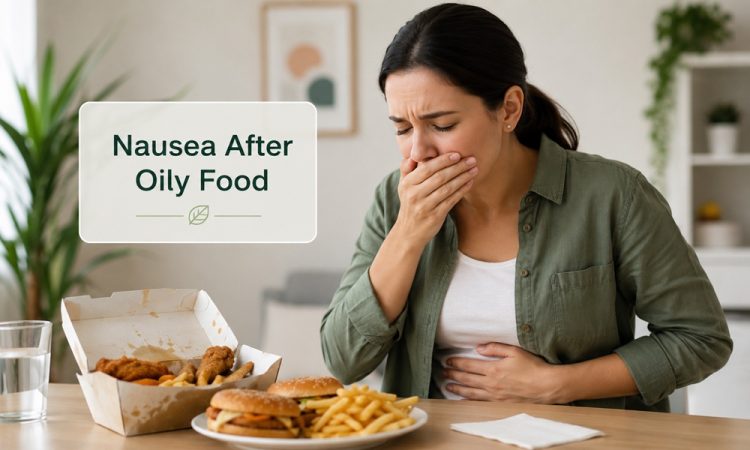
You eat samosas, fried chicken, or a cheesy pizza, and within 30–60 minutes — queasy, bloated, sometimes sweating, sometimes outright vomiting. Nausea after oily food is one of the most common digestive complaints, yet most people just ignore it.
Sometimes it is harmless. Sometimes your body is begging you to investigate.
Why Does Oily Food Cause Nausea? The Science
Fat is the toughest macronutrient to digest. Here is what happens after a high-fat meal:
- Your stomach empties slower — food sits there longer.
- Your gallbladder squeezes out bile to break down fat.
- Your pancreas releases enzymes (lipase) for fat digestion.
- Hormones like cholecystokinin (CCK) spike — and CCK directly triggers nausea.
- If anything in this chain is weak — slow gallbladder, low enzymes, weak gut bacteria — you feel sick.
8 Common Causes of Nausea After Oily Food
1. Simple Fat Overload
Your digestive system has limits. Eating too much fat in one sitting overwhelms it — nausea is normal protection.
2. Gallbladder Problems (Most Important)
Gallstones, sluggish gallbladder, or post-cholecystectomy fat intolerance are leading causes of persistent nausea after greasy meals. Often there is no severe pain — just nausea, bloating, and discomfort in the upper right belly.
3. Low Stomach Acid
Counterintuitive but true: low stomach acid slows digestion of fats and proteins, leading to nausea and bloating.
4. Pancreatic Insufficiency
If your pancreas does not release enough lipase, fats stay undigested. Symptoms: nausea, oily stools, and weight loss.
5. IBS or Functional Dyspepsia
People with IBS often cannot tolerate fatty meals. The gut becomes hypersensitive.
6. Imbalanced Gut Microbiome
Beneficial bacteria help process fat. Antibiotics, low-fiber diets, and chronic stress damage them — making oily food harder to handle.
7. Food Poisoning or Contaminated Oil
Reused or rancid oil contains harmful compounds that can trigger immediate nausea and vomiting.
8. Pregnancy
Hormonal changes make fatty smells and tastes unbearable, especially in the first trimester.
Symptoms That Usually Come With Nausea From Oily Food
| Mild (Common) | Concerning (See Doctor) |
| Bloating and fullness | Severe right-side pain |
| Mild burping | Vomiting that won’t stop |
| Mild heartburn | Yellow skin or eyes (jaundice) |
| Brief queasiness | Black or bloody stools |
| One-time discomfort | Fever + nausea |
| Resolved within 2 hours | Persistent for many days |
How to Get Quick Relief From Nausea After Oily Food
In the Next 30 Minutes
- Sit upright — do NOT lie down.
- Sip warm water with lemon or ginger.
- Chew on a small piece of fresh ginger.
- Try peppermint tea or peppermint oil (smell, not ingest).
- Suck on a piece of ice or chew gum to increase saliva.
- Open a window — fresh air calms nausea fast.
- Breathe slowly: inhale 4 seconds, hold 4, exhale 6.
In the Next Few Hours
- Eat dry, bland foods: toast, crackers, plain rice.
- Avoid more fat, dairy, and caffeine.
- Drink small amounts of ORS or coconut water.
- Take a slow short walk to aid digestion.
Foods That Calm Post-Oily-Meal Nausea
- Ginger tea or fresh ginger
- Bananas (gentle, easy to digest)
- Plain dry toast or crackers
- Buttermilk with cumin
- Mint or fennel tea
- Cold rice or curd rice
Long-Term Strategies to Prevent It
- Eat smaller portions of fried food.
- Combine fatty foods with fiber and vegetables — they slow absorption.
- Cook with healthier oils (mustard, olive, ghee in moderation) instead of refined/reused oils.
- Avoid eating fried street food on an empty stomach.
- Add probiotic foods (curd, kefir, fermented foods) to support gut bacteria.
- Stay hydrated.
- Avoid alcohol with fatty meals — it stresses the liver and gallbladder.
- Get an ultrasound if nausea is frequent — check the gallbladder.
When to See a Doctor
See a doctor if you have nausea after every oily meal for over 2 weeks, severe pain in the upper right abdomen, vomiting that won’t stop, yellowing of skin or eyes, unexplained weight loss, pale or oily-looking stools, or fever with nausea.
Diagnostic Tests Your Doctor May Order
| Test | What It Checks |
| Abdominal ultrasound | Gallstones, gallbladder, liver |
| Liver function test (LFT) | Liver inflammation |
| Lipase, amylase | Pancreas health |
| H. pylori test | Stomach infection |
| Stool fat test | Fat malabsorption |
| Endoscopy | Ulcers, gastritis |
FAQs
Can nausea after oily food go away on its own?
If it is occasional and mild — yes, usually within a few hours.
Why do I feel nauseous after oily food but not after eating fruits or salads?
Fat digestion specifically demands bile and pancreatic enzymes. If either is sluggish, fatty meals are uniquely hard.
Is it normal to feel nauseous after eating oily food during pregnancy?
Very common, especially in the first trimester. Stick to lighter meals and small frequent snacks.
Can low water intake make oily food feel worse?
Yes. Dehydration slows digestion and intensifies nausea.
If nausea after oily food keeps happening, do not just blame the meal. Your body may be flagging a digestive issue worth investigating. The earlier you address it, the easier it is to fix.